
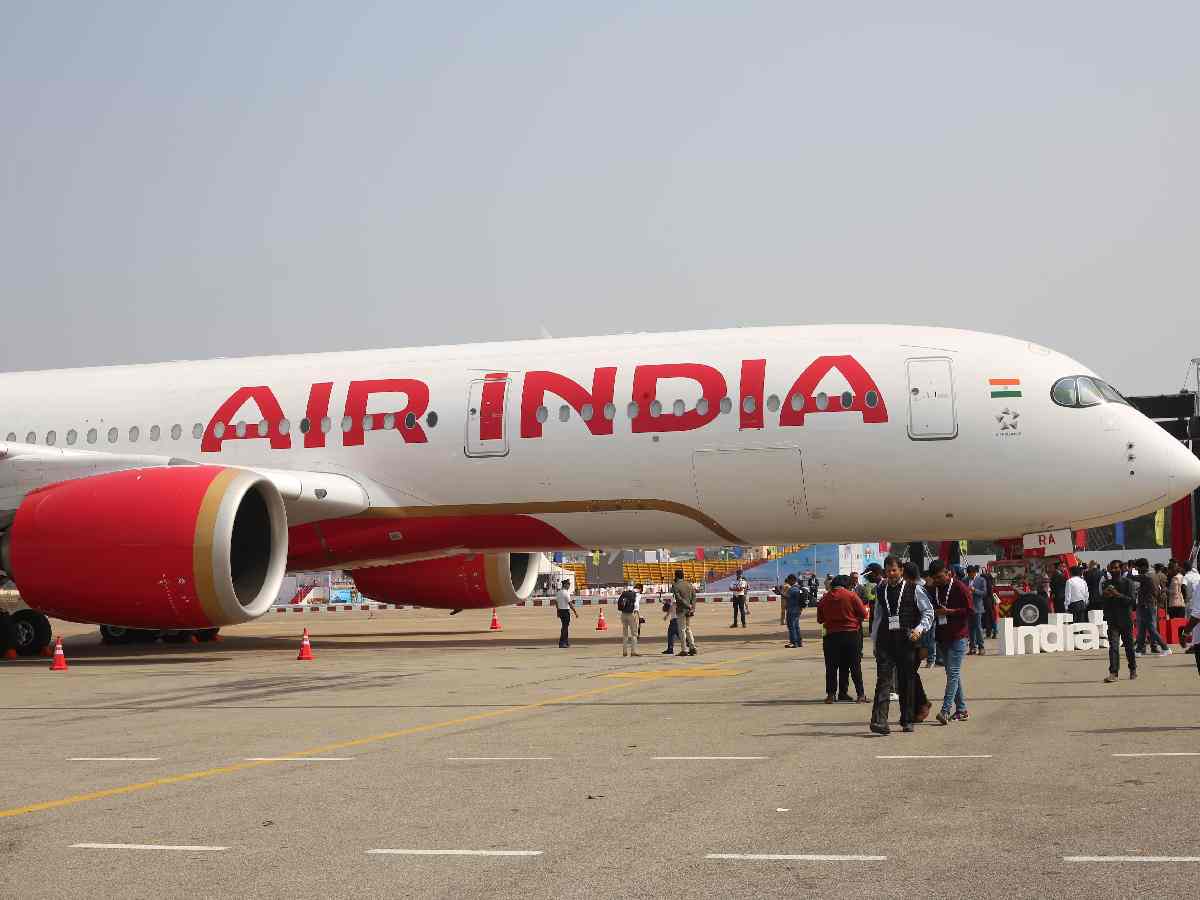
The auxiliary power unit of Air India flight AI-315, which was traveling from Hong Kong to Delhi, ignited shortly after landing at Indira Gandhi International Airport, as reported by the airline on Tuesday.
The fire was identified while passengers were disembarking from the aircraft, according to the airline. The auxiliary power unit, known as APU, was automatically deactivated once the fire was detected, allowing passengers and crew to exit the plane safely, the airline added.
Air India indicated that there was “some damage” to the aircraft – a twin-engine Airbus A321 – which has been grounded while an investigation is conducted. The Director-General of Civil Aviation has been informed. This incident in Delhi adds to the concerns for a domestic airline that has received nine notices in six months for five safety violations, as stated by junior Aviation Minister Murlidhar Mohol in Parliament on Monday.
3 Incidents In 2 Days For AI
This marks the third near-miss for Air India within a span of 48 hours.
On Monday, a flight from Kochi to Mumbai strayed off the runway during landing, causing damage to both the aircraft and the runway. Images obtained by NDTV revealed crumpling of the engine cover.
Later that same day, a Delhi-Kolkata flight aborted its take-off at the last moment, when the aircraft was traveling at 155 km per hour. The airline subsequently reported that a “technical issue” was identified during the take-off.
Interestingly, a “technical issue” also affected a plane on the same route last month. At that time, it involved a Boeing 787-8 Dreamliner, which had to return to Hong Kong airport.
This incident occurred three days after the Air India plane crash in Ahmedabad.
AI-171 Boeing Plane Crash
However, the most significant concern remains the Boeing 787-8 Dreamliner, operating as AI-171 from Ahmedabad to London, which crashed 32 seconds after take-off on June 12. No explanation has been provided for the crash.
The crash, which was recorded live on a mobile phone, resulted in the deaths of 274 individuals, including 19 on the ground, after the aircraft lost thrust in mid-air and collided with a college hostel. Only one passenger on the aircraft survived.
A preliminary report from the Aircraft Accident Investigation Bureau revealed that both fuel supply switches had shifted from the ‘RUN’ to ‘CUTOFF’ positions just seconds after takeoff. The final report, which is expected to clarify the events that transpired, is still awaited. Nevertheless, various press reports have concentrated on the positions of the switches and a snippet of the conversation recorded between Captain Sumeet Sabharwal and First Officer Clive Kunder.
In that snippet, one pilot (it remains unclear who) inquires of the other why he turned off the fuel supply. The second pilot replies that he did not.
The Wall Street Journal, an American publication, has asserted that the recording suggests that Captain Sabharwal intentionally turned off the fuel supply. This assertion, which lacks conclusive evidence, has faced strong criticism from both the Indian government and the aviation sector.
Last week, the Aircraft Accident Investigation Bureau, or AAIB, criticized international media for their “unverified” and “irresponsible” reporting. The National Transportation Safety Board of the United States, which is assisting the AAIB in this investigation, also condemned the foreign press’s coverage.
The fuel supply switches on the Boeing 787-8 Dreamliner, the aircraft involved in the crash, are engineered to remain stationary unless deliberately adjusted by a pilot; they are spring-loaded and must be lifted and positioned correctly. This design is intended to prevent accidental adjustments.
Following the AAIB’s preliminary report, domestic airlines operating Boeing jets were mandated to perform inspections on the switches that control fuel supply to the engines. This requirement was enforced for all Boeing aircraft registered in India. Air India subsequently announced that it had completed the inspections and found “no issues.”
Leave a Reply