
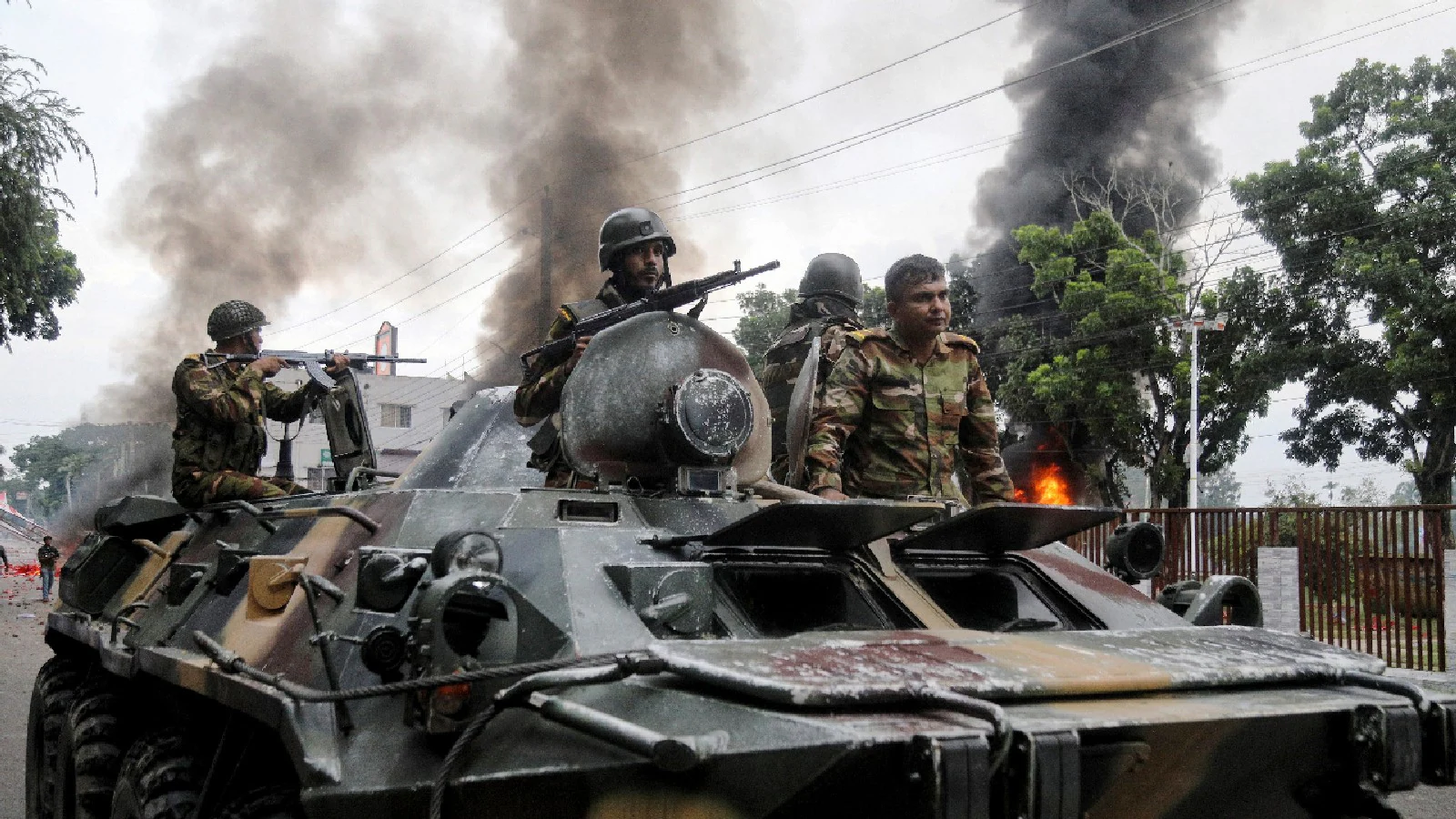
Violence broke out during a rally organized by Bangladesh’s youth-led National Citizen Party (NCP) in Gopalganj, a southern town, on Wednesday, resulting in the deaths of four individuals. The protests against Sheikh Hasina disrupted the hometown of the Prime Minister-in-exile and her father, Sheikh Mujibur Rahman, who is recognized as the founding father of Bangladesh.
As reported by Prothom Alo, Gopalganj, the birthplace of Bangabandhu, transformed into a battleground as hundreds of supporters of his daughter, members of the Awami League, reportedly clashed with police prior to the planned march by the student-led NCP to the district.
However, the newspaper, citing an unnamed local journalist, noted that ordinary citizens and even members of former Prime Minister Khaleda Zia’s Bangladesh Nationalist Party (BNP) collaborated with local Awami League leaders and activists to thwart the NCP.
Yunus directly accused the Awami League of instigating the violence. He stated, “Preventing young citizens from peacefully commemorating the one-year anniversary of their revolutionary movement is a disgraceful infringement of their fundamental rights,” attributing the violence on Wednesday to Hasina’s political party, the Awami League, and its student faction.
“This atrocious act — allegedly executed by members of the banned Awami League’s Chhatra League and AL activists — will not go unpunished. The offenders must be promptly identified and held fully accountable. There is no tolerance for such violence against any citizen of Bangladesh,” declared the chief adviser’s office.
Reports identified two of the deceased as Dipto Saha, 25, and Ramazan Kazi, 18. Both were pronounced dead upon arrival at Gopalganj General Hospital with gunshot wounds, while at least nine others were treated for bullet injuries, according to medical staff.
The outbreak of violence led to the deployment of four additional platoons of Border Guard Bangladesh (BGB), totaling nearly 200 personnel, as authorities pledged to take strict action against those responsible for the clashes.
A 22-hour curfew was enforced in Gopalganj starting at 8 pm on Wednesday, according to Chief Adviser Muhammad Yunus’s office, which cautioned that those responsible for the attacks would be held accountable.
Did NCP Incite Tensions?
Speeches from the top leaders of the NCP included phrases such as “eliminating Mujib’s legacy” and “liberating Gopalganj from Mujibism,” with some leaders even asserting that they would ensure “justice for themselves” if the police failed to respond.
Protesters assaulted police vehicles and the car of the local administrative head, also targeting the NCP convoy, which led security forces to open fire, as reported.
In spite of the turmoil, the NCP proceeded with its rally on a damaged stage, utilizing broken sound equipment, with convenor Nahid Islam declaring that they would seek justice independently if the authorities did not act.
Islam, along with prominent NCP leader Hasnat Abdullah, openly committed to dismantling the remaining symbols of what they referred to as “Mujib’s legacy.” Islam also cautioned that if justice regarding the assault on their rally was not promptly delivered, the NCP would take it upon themselves to “liberate Gopalganj from Mujibism.” “We will pursue our own justice if the police forces do not act,” stated Islam.
These remarks followed NCP leader Sarjis Alam’s condemnation of the attack on their motorcade earlier that day, urging everyone to converge on Gopalganj and resist members of the banned Awami League. “In Gopalganj, the agents of the murderer Hasina have assaulted us. The police are merely standing by, observing the situation, and retreating,” Alam expressed in a Facebook post.
Leave a Reply